|
The heart of Punjab
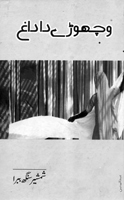
Reviews of an authentic account of a Punjabi village and the first sizeable document about the historical and revolutionary Sikh National College
By Nadir Ali
Vichchoray da Dagh
(Punjabi)
By Dr Shamsher Singh Babra
Publishers: Wichaar
Publishers, Virginia
Price: Rs 400
Pages: 322 (HB)
Email: wichaar@wichaar.com
Unblossomed Bud
A Saga of Intellectual Rebels
Sikh National College Lahore 1938-1947
By Dr Shamsher Singh Babra
Publishers: Five Rivers
Publishers Inc. Washington
Price: Not mentioned
Pages: 228
Email: wichaar@wichaar.com
By heart of Punjab I do not mean Lahore, the terribly enlarged heart of Punjab. I mean a "Punjabi village" which by its community life and tradition, language and idiom -- including a farmers and craftsman's working life, vocabulary and folklore -- represents the heart of Punjab.
Dr. Shamsher Singh Babra is a renowned economist, has been a Divisional Head at the World Bank, a visiting fellow at Oxford, a consultant at the UNO and has appeared as an expert at the British House of Lords. His Punjabi book, Vichchoray da Dagh, is about Chotian Galotian, his native village in Sialkot at Gujranwala-Sialkot district border where he lived until his graduation from Sikh National College Lahore 1947. Unblossomed Buds, his other book in English, is the first sizeable document about the historical and revolutionary Sikh National College. It is also the key to Vichchoray da Dagh, which is arguably the best book written about a Punjabi village with the ability to thrill and move its readers to tears.
The Punjabi village -- as my generation born in the nineteen thirties, or the author's, born in the twenties knew it -- is almost dead now. Punjabi village died without anyone writing its obituary or, as in this case, its elegy. It is a historical document because, with an economist's discipline, the distinguished doctor has collected data from fellow villagers all over the world.
Truly, the book has many authors like judge Bhagat Singh, a writer himself, whose detailed account appears in the book. Diwan Singh's life account -- a revolutionary who was sentenced to "Kala pani" and was shot dead by the Japanese in 1944 -- has been included as a distinguished son of the village. The book is many things at the same time -- it is a poetic and scholarly account, is gossipy at times and at places reads like a lover's lament. Sometimes, it appears disjointed but, to another villager like me, the slips are as important as the scholarly observations.
A famous book Punjabi Century by Prakash Tandon appeared in early nineteen sixties; later it turned into a trilogy and appeared as Punjabi Saga and became popular because of some vignettes of Punjabi rural and city life. It was the author's autobiography who ultimately became the boss of Lever Brothers India and a denizen of Bombay. Where that book gave only some bits and pieces of life in a Punjabi village, Dr. Babra has created a brief compendium of the life in a Punjabi village. Every aspect of life -- cultural, social, economic, tribal, religious, historical, agricultural, scandalous, political and memorable -- has been covered. The village map and period photographs have also been included. The village in 1946 had a population of 3000, much larger than an average Punjabi village in mid-century, with an area of 1175 acres, averaging 10 acres per household. There were 1050 acres under plough. The ownership was 75 percent Sikh Jats, 7 percent Sikh Ramgarias ( carpenters), 12 percent Muslim Jats, four percent Muslim Arains, one percent Khatri Sikhs and a Kashmiri who was an oilmaker/cotton carder (Teli). The population was 52 percent Sikhs, 39 percent Muslims, seven percent Christians, two percent Hindus. Dr. Babra has many other statistics -- giving the number of wells, village ponds and land covered by passages, ponds and village commons.
The ownership history by castes and by non-agriculturalist castes would need another book. But, in its present framework, the book is a unique record of the village which is both typical and atypical.
Nor does it read like a dry record. It is an unputdownable story of the daily life in the village that reads like a novel; the stories of various feuds, fights and fairs in the village with each character so vividly recreated that it literally comes alive.
I have suggested that Unblossomed Buds, published many years earlier, is a key to Vichchoray… Being a student of the Sikh National College explains how the author reached the heart of Punjab. Sikh National College, in its brief life of ten years, indeed represented the political heart of Punjab -- nationalist, leftist and secular. It reluctantly kept the word Sikh in its name for reasons of funding that came from Sikh donors. The tragedy of the Sikh community is also reflected in this college's history. Its principal Niranjan Singh was the brother of famous Master Tara Singh. But, unlike his elder brother, Niranjan Singh was a secular, pro-Congress nationalist.
The college was founded by a group of pro-Congress and anti-Akali, left-inclined teachers from Khalsa College Amritsar. Thus the history of this college, its faculty and alumni, is a missing chapter from the history of Punjab. Muslims and majority of Sikhs will not accept this version of Punjab's history; all the more reason why this chapter becomes central.
Dr. Babra in the last part of the book looks like a partial witness of the partition events in Lahore, mainly because we have mostly read the accounts written on our side. He cannot be blamed; having been arrested on a false murder charge in early 1947 in the midst of pre-partition riots and having lost his village, his entire impressionable memories and possessions with the partition. He was released from this predicament as luckily the habeus corpus petition was heard by Justice Teja Singh of Lahore High Court. This account can be called partial only in retrospect. The sad partition chapter forms only a footnote to the book but is very significant. It is an accurate and truthful account of a man so terribly hurt by the events of 1947. We rarely find such accurate eyewitness accounts from such unimpeachable sources.
The account of pre-partition Lahore and of the wonderful but forgotten history of Sikh National College is given at length. The book project was conceived at an old boys' get-together in 1992 to honor late Prof. Kishen Singh, famous for his leftist/rational interpretation of the Granth Sahib. Dr. Babra travelled all over the world to collect accounts of the small, one hundred in all, surviving members of the faculty and old students. Dr. Babra is a man possessed; possessed above all by love, the essence of the teachings of Guru Nanak.
One small non-Sikh alumni Ranjit Nainwala's case is an interesting but typical case. He was thrown out of the famous Holkar College Indore of Central Province (now Madhya Pardesh) on charges of seditious activities. He knocked at Prof. Niranjan Singh's door who, through personal contacts in the University of the Punjab, got permission to admit him when no other college in the whole of India accepted him. In the author's words "Ranjit and many such students had become charged with the spirit of freedom: Mohan of Mahlpur, Raghbir Basi and Man Mohan Singh were among them". So was our Prof. Sharif Sabir, who has not been mentioned in the book. Prof. Sharif Sabir who is one of the best scholars of Punjabi language famous for his editing of Heer Waris Shah and many other Punjabi classics also went to Sikh National College. He was the student of famous Prof. Pritam Singh.
The last chapter of the book is the most significant. Most of us have not read many non-Muslim accounts though these abound in English books published in the West and in India. This is a very painful account. The point of view is naturally of a non-Muslim living in Lahore and his village until after partition.
Unfortunately, Unblossomed Buds is not available in Pakistan. Vichchoray da Dagh is available at the Sahiwal address of Wichaar Publishers courtesy Prof. Manzur Ejaz and Dr. Shahid Amjad, formerly of World Bank, and now founder and head of the Lahore School of Economics. One hopes Dr. Shahid Amjad will arrange their availability and distribution in Pakistan. The launch of the first book was arranged at Lahore School of Economics in November 2008. That is how one got hold of the two books as gifts from the author.
Ch. Anwar Aziz, formerly a minister of Mr. Bhutto's government, arranged the author's first post-partition visit to his village, where thousands turned up to greet him. Dr Babra's father's house still stands. The author paid for the rebuilding of the Gurudwara which stands as a monument to the visits of 4th and 8th Guru of the Sikh religion to the village.
The Sikh National College faculty included besides Principal Narinjan Singh, Professor Kishan Singh, Karter Singh Duggal, the famous writer and the famous Prof. Pritam Singh who died recently. Sharif Sabir and thousands of others were taught and inspired by them. Each member of the faculty was a gem of commitment and knowledge. Other colleges in Lahore had their strengths. Government College produced the ICS class and ruling elite of both the Punjabs, DAV college was a bastion of Hindu nationalism, Islamia College was a centre of rising Muslim nationalism where many poor Muslims of Punjab found shelter. Dyal Singh College was a left-leaning college. But Sikh National College was the heart of Indian Punjabi secular nationalism and leftist political ideology.
Among its alumni, majority of whom were Sikhs but not so by design, were Prakash Singh Badal, later chief minister of East Punjab and many other politicians, members of legislative assembly of Punjab. Many prominent entrepreneurs and scholars are spread all over the world. Dr. Babra contacted each one of them to record their memories. This long list of old faculty and alumni appears at the end of the book.
The News:Literati: Sunday,June 27,2009
|
